

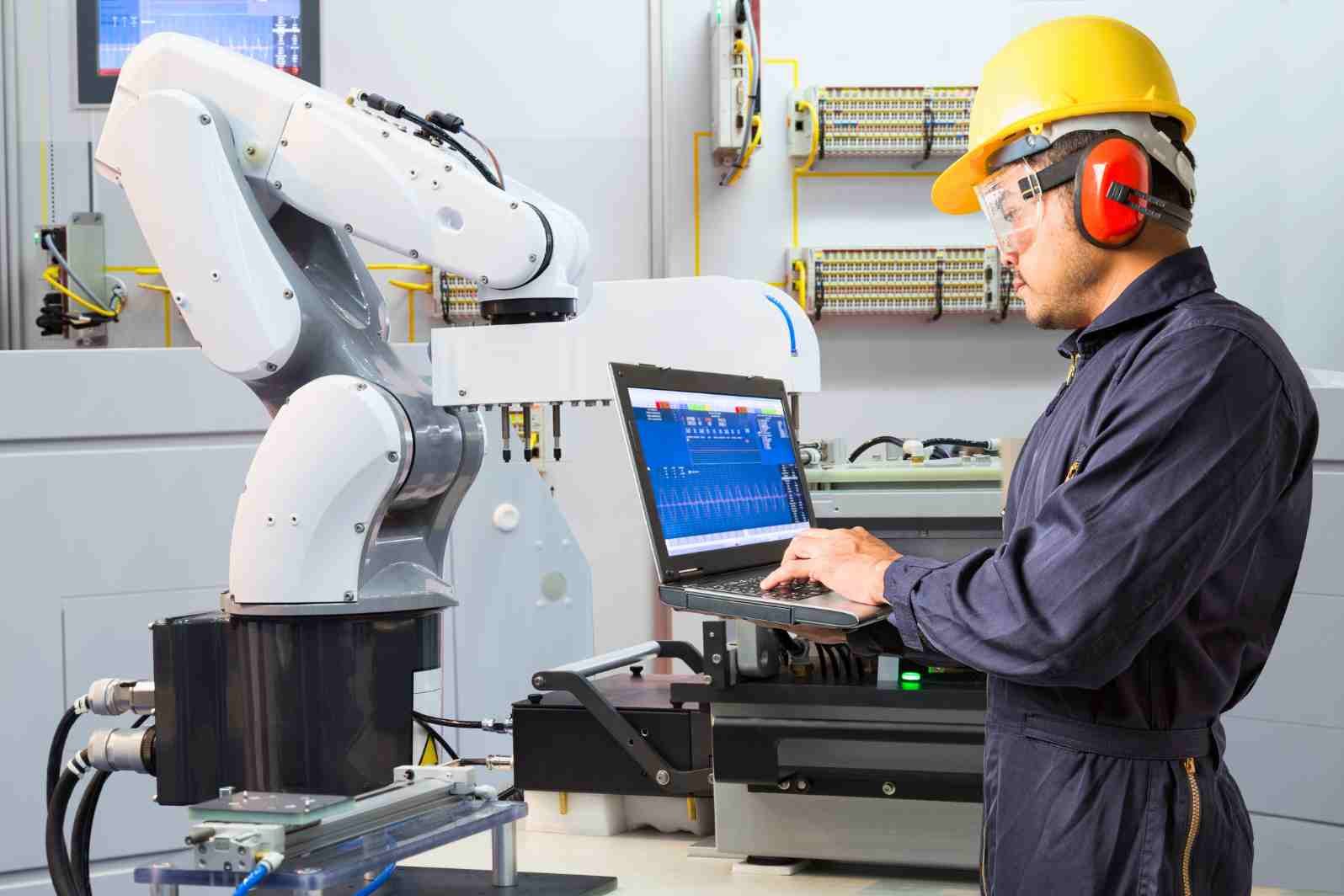
Manufacturing has changed dramatically in recent years. Factories no longer rely only on manual labor or outdated machines. Technology drives production today. Automation increases speed, precision, and efficiency. Industrial automation uses control systems such as computers and robots to handle processes and machinery, reducing human effort. It is widely applied in industries including automotive, electronics, food processing, and textiles.
What Is Industrial Automation
Industrial automation is the use of control systems for operating equipment in manufacturing plants, boilers, switches, machinery. They can also handle assembly, packaging, testing, and material handling avoidance without constant human involvement. Automation systems follow programmed instructions. Real time conditions are sensed and machines respond using controllers. This enhances production accuracy and consistency. This has lowered dependency on manual work and improved factory efficiency.
Importance Of Automation In Manufacturing
Speed, accuracy and consistency are a must for manufacturing industries. These demands cannot be satisfied at scale without automation. From automation allowing industries to produce goods sooner and with a lower error rate. It also minimizes waste and higher product quality. Automation helps companies stay competitive to meet growing customer demand.
The Most Significant Technologies Utilized In Industrial Automation
Various technologies within industrial automation work together to control processes and optimize them.
Some important technologies include:
- Robotics for automation and assembly
- Monitoring sensors and control systems
- Artificial intelligence for decision-making
These technologies help enhance productivity and make operations more reliable.
Types Of Industrial Automation Systems
Manufacturing uses different automated systems. Each system fits specific production needs. Fixed automation handles large‑scale repetitive tasks. Programmable automation adjusts production settings. Flexible automation supports diverse production with rapid changeovers. By understanding these types, industries can avoid selecting the wrong system.
Benefits Of Industrial Automation
Advantages of Industrial automation in the manufacturing performance Increases production velocity and human errors. It also enhances safety because fewer workers need to work in hazardous conditions. With automation, better utilization of resources and lesser operational costs can be achieved.
How Automation Improves Productivity
Automation makes it possible for machines to work around the clock without ever needing a vacation. This improves output and reduces delays. You can train machines to do things that a human being has had drilled into them to the point of rote that you have them acting out actions so much easier and faster. That, in turn, facilitates meeting production targets more efficiently. It frees workers up to do more skilled and meaningful work.
The Role Of Artificial Intelligence In Automation
AI is among the key players in modern day automation. It enables machines to learn from the data and get better. AI systems are able to predict maintenance requirements, identify errors and optimize production processes. Resulting in smarter, more efficient manufacturing systems.
Challenges Of Industrial Automation
Every coin has two sides and industrial automation is the same. For small businesses, the initial setup cost may be high. And somebody to operate and maintain the machines. Production may be affected by technical issues and system failures. But all of this can be overcome through proper planning and training.
Future Of Industrial Automation
Industrial automation will continue to evolve with new technologies. The Future of Manufacturing: Advanced Robotics, AI & Smart Factories Industries are heading toward completely automated system where machines interact with each other. It will also increase efficiency and innovation in production (Pugliese, 2020).
How Businesses Can Adopt Automation
The first way is starting automation by identifying requirements of a business. By following a simple approach, one can ensure seamless adoption.
- Analyze current production processes
- Find tasks that are automated
- Choose suitable technology and tools
- Train employees for new systems
It assists enterprises in effectively integrating automation.
Conclusion
Industrial automation is digitally revolutionizing manufacturing processes for increased speed, safety, reliability and efficiency. It increases productivity, quality, and reduces human effort. Technologies such as robotics, sensors and artificial intelligence are making the change. Although there are issues, the advantages of automation are enormous. Those organizations which practice automation, tend to perform better and streamline their position in the industry order.
FAQs
Q1. What Is Industrial Automation?
This is the application of machines & technology to carry out manufacturing operations.
Q2. Why Is Automation Important In The Manufacturing?
It enhances speed, accuracy and efficiency.
Q3. Artificial Intelligence & Machine Learning in Automation
Robotics, sensory and artificial intelligence are widely employed.
Q4. Does Automation Reduce Jobs?
It alters job functions, but at the same time, it opens up new opportunities.
Q5. What Is The Future Of Industrial Automation?
It will use more intelligent and sophisticated automated systems.

